The first psychological eating journal
For recognizing and handling the emotions and thoughts behind overeating, instead of counting calories.
For recognizing and handling the emotions and thoughts behind overeating, instead of counting calories.
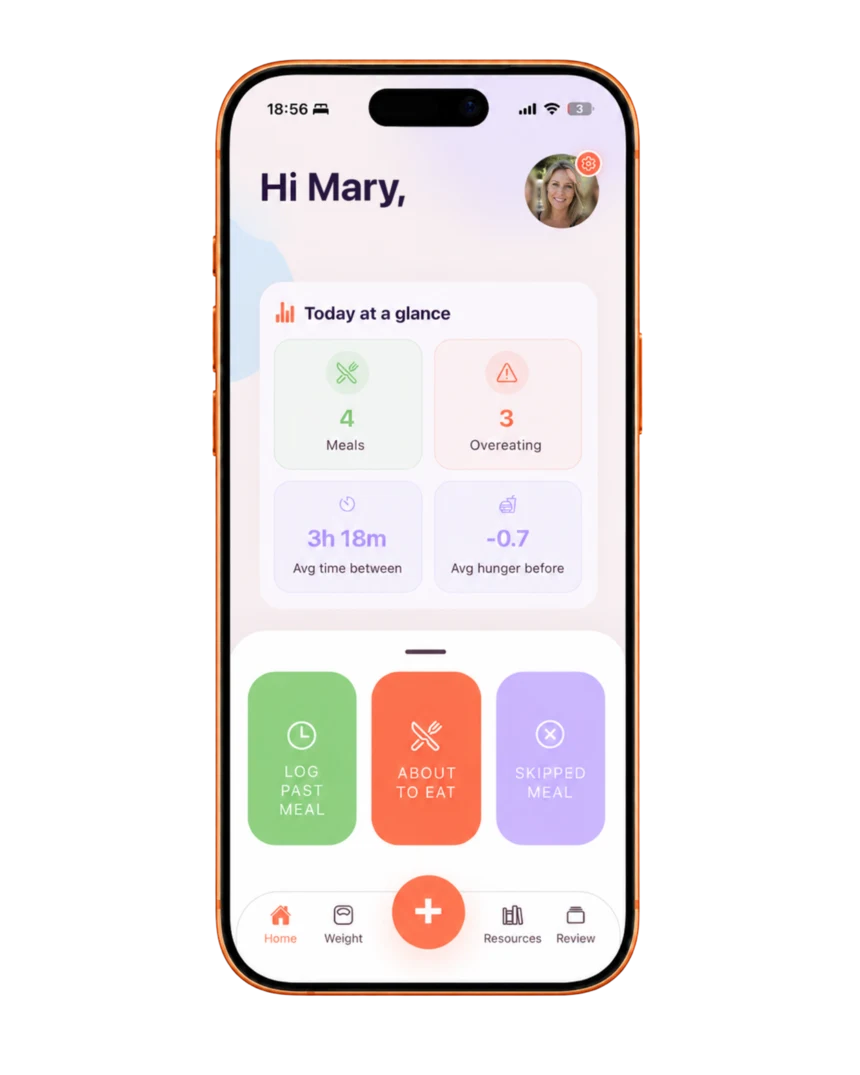
Nyami is not only for people who want to lose weight. It can also help if your BMI is normal, but you want to understand your eating habits more clearly.
If diets, calorie counters, and quick fixes have left you looking for a more sustainable lifestyle change.
If you struggle with overeating episodes, stress eating, or guilt after eating, and want to see what tends to happen before them.
If you do not want forbidden foods or red and green days, but a calmer, more intuitive relationship with eating.
If you often wonder, 'why do I eat when I am not hungry?', and want to tell hunger apart from emotions.
If your eating habits, thoughts, and circumstances matter more to you than barcodes and numbers.
If you want to journal for self-awareness and see which eating patterns repeat in your everyday life.
How many times have you started counting every bite, only to give up after a few weeks because it was too much hassle? Or maybe you lost some weight, then slowly slipped back into old eating habits?
Research suggests that rigid diet rules (the “I’m never eating bread/chocolate/ice cream again” kind of thinking) may bring short-term weight loss for many people, but long-term weight regain!Jump to research references supporting this claim[1], [2]
For sustainable change, you need to understand:
The goal is to notice and gradually change your eating patterns.
That's what leads to real transformation: a happy, calm, guilt-free approach to food that lasts a lifetime.
Nyami is a psychological eating journal that helps you move beyond calorie counting and:
Because once you understand your patterns, you can finally change them, for good.
Write down the meal briefly, without weighing, barcode scanning, or calorie counting.
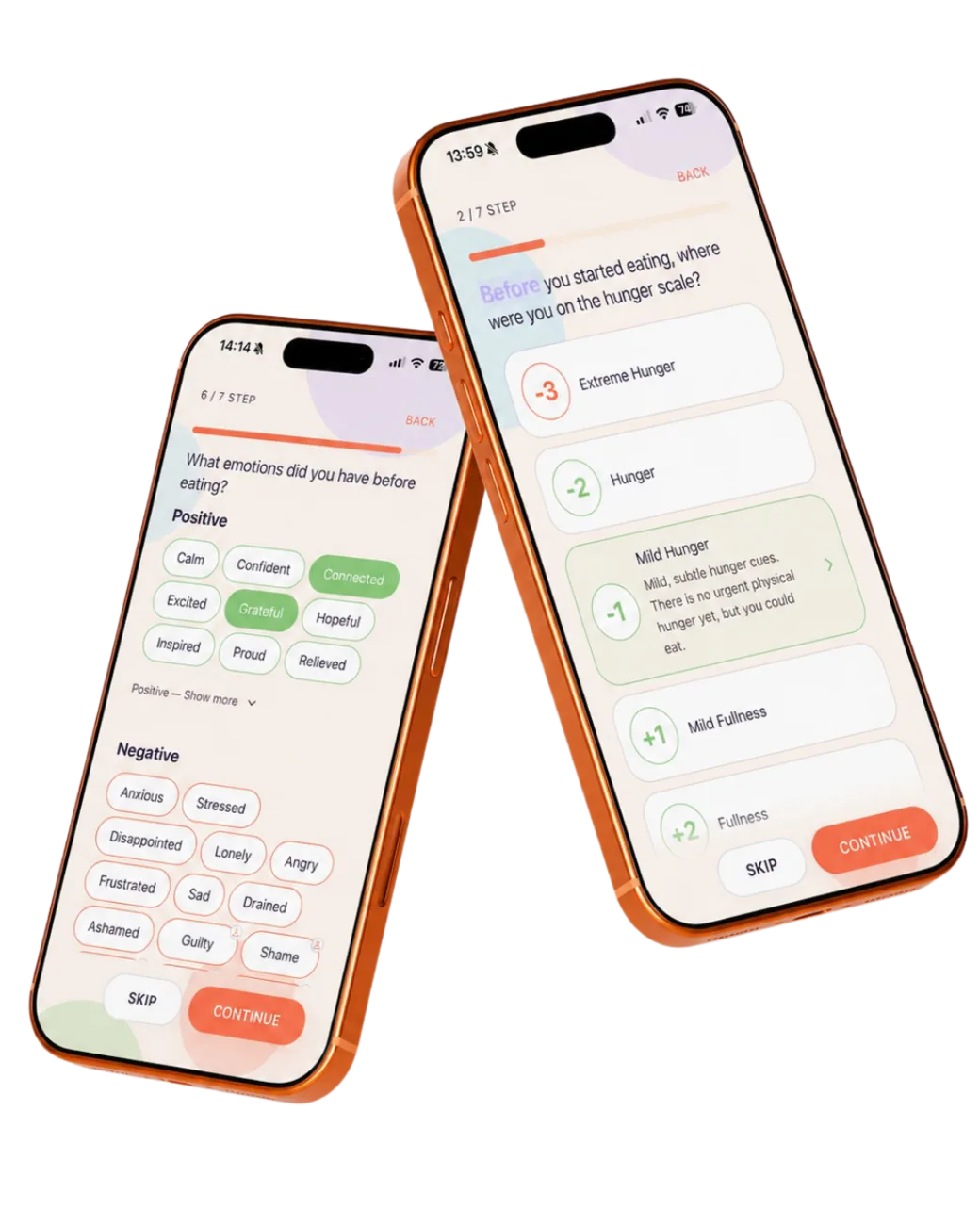
Notice how hungry you were before eating and how full you felt afterward.
See which mood, situation, or automatic thought was connected to the meal.
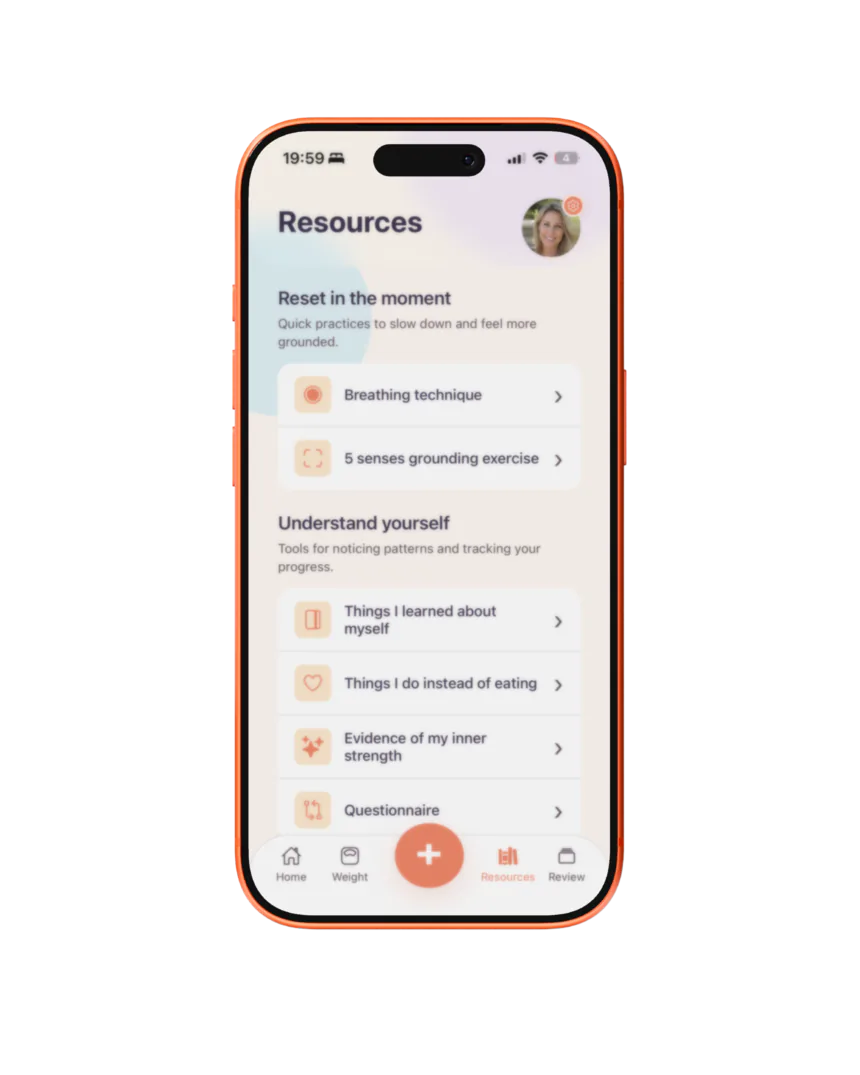
When you feel like eating, Nyami helps you get through difficult emotions with breathing exercises, mindfulness practices, or mantras.
Weekly and monthly reviews help you spot when overeating, stress eating, or loss-of-control eating tends to appear.
Your insights become small, realistic changes that help you feel calmer and more aware around food.
Nyami is almost ready
Get one short email when Nyami launches, plus occasional product updates and practical tips for emotional eating, overeating, and mindful eating.
Need to know more?Nyami may support weight loss, but its main goal is to help you build a healthy relationship with eating. Instead of stressing over grams and macros, Nyami helps you understand why you eat: your patterns, emotions, and habits. Lasting change comes from awareness and self-reflection, not restriction, and that's exactly what Nyami supports you with.
Yes! You can export your full eating diary as a printable PDF, for a date range you choose if you like (for example the last two weeks), to share with your psychologist. We designed Nyami to complement therapy or any process of understanding yourself better.
Nyami is for anyone who wants to feel more peaceful and confident around food. Whether your goal is to stop emotional eating, understand your habits, or simply eat more intuitively, Nyami helps you reconnect with your body and mind, no diet required.
Nyami is not built around scanning, points, or red and green days. In the eating journal, you notice what you ate, how hungry or full you felt, which emotions and circumstances were present, and which patterns keep repeating.
Yes. Nyami's prompts help you check in with hunger, fullness, emotions, and thoughts before and after eating. Over time, you can see more clearly when physical hunger is present and when stress, tiredness, boredom, or tension is behind the urge to eat.
Nyami is a guilt-free eating journal with a psychological focus. It does not center calories or judgmental feedback. Instead, it helps clients observe hunger and fullness cues, emotions, thoughts, circumstances, and repeating eating patterns. This gives them structured self-observation between sessions and makes it easier to bring concrete insights into therapy.